
From three hectares to ninety, in three generations
Nearly everything worth knowing is in the dates and in the ground: it is alberese, it is full of stones, and it is steep.
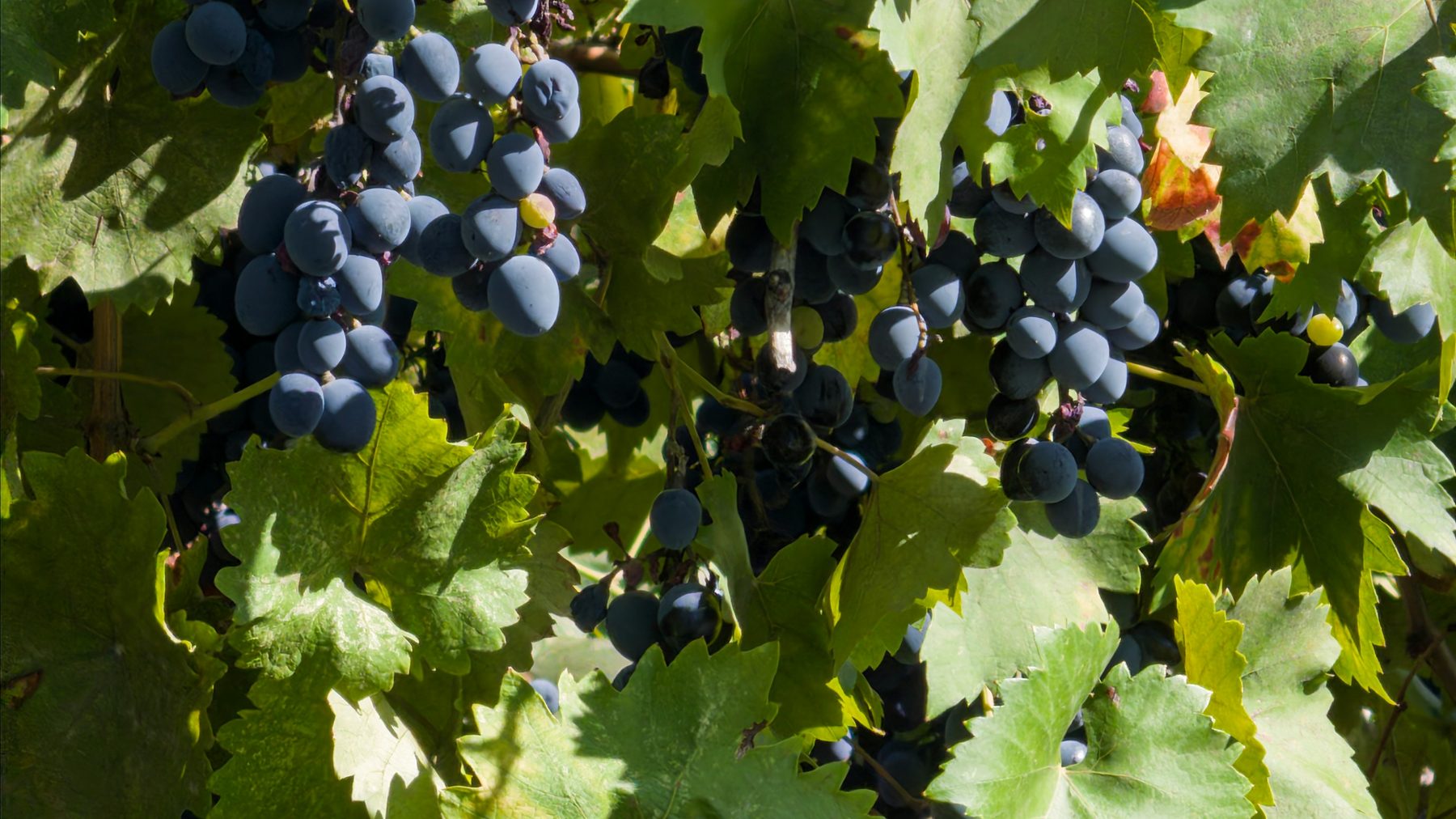
The first three hectares
In 1964 Silvano Giachetti bought three hectares of land at San Casciano in Val di Pesa from the Curia of Florence. There were a few rows of vines here and there, as was usual then: vines were one of the things you did, not the only one.
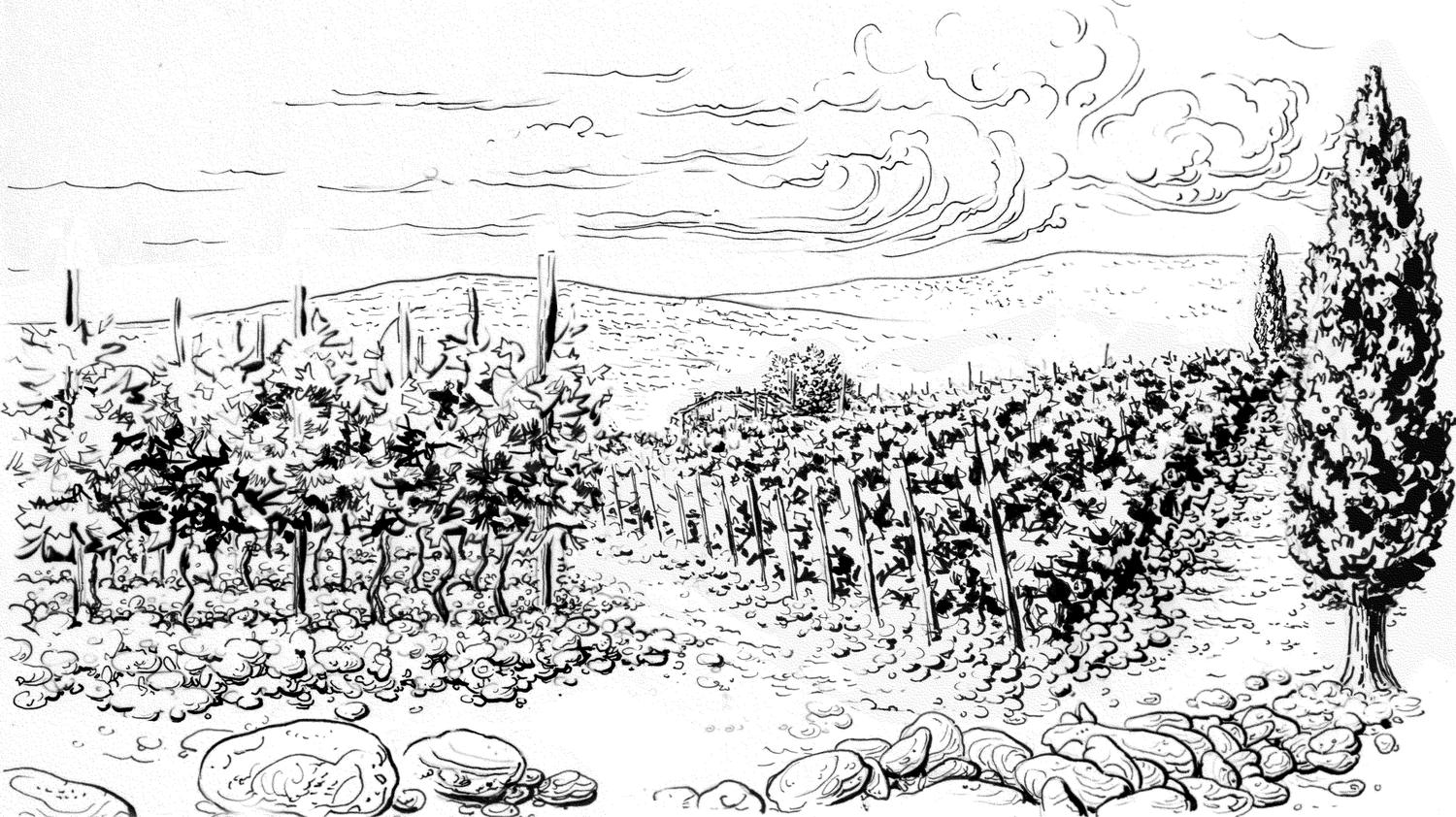
From there the estate grew a piece at a time. Today it is seventy hectares of vineyard, plus twenty of olive groves, split across more than a dozen plots scattered over the hills. We are the third generation: Massimo, Silvano's son, and Stefano, who runs it now.
Alberese, galestro, clay
The soil changes from one plot to the next, and sometimes within one: alberese — the pale limestone marl that crumbles — galestro and clay. What they have in common are the stones.
The vines sit between 220 and 300 metres above sea level, facing mostly south. A vineyard on these soils yields little and works hard, but it gives grapes with acidity and scent.
San Casciano is at the far northern edge of the Chianti Classico zone: cooler than the rest of Chianti, with a wider gap between day and night. That is why the wines from here are wiry rather than big.
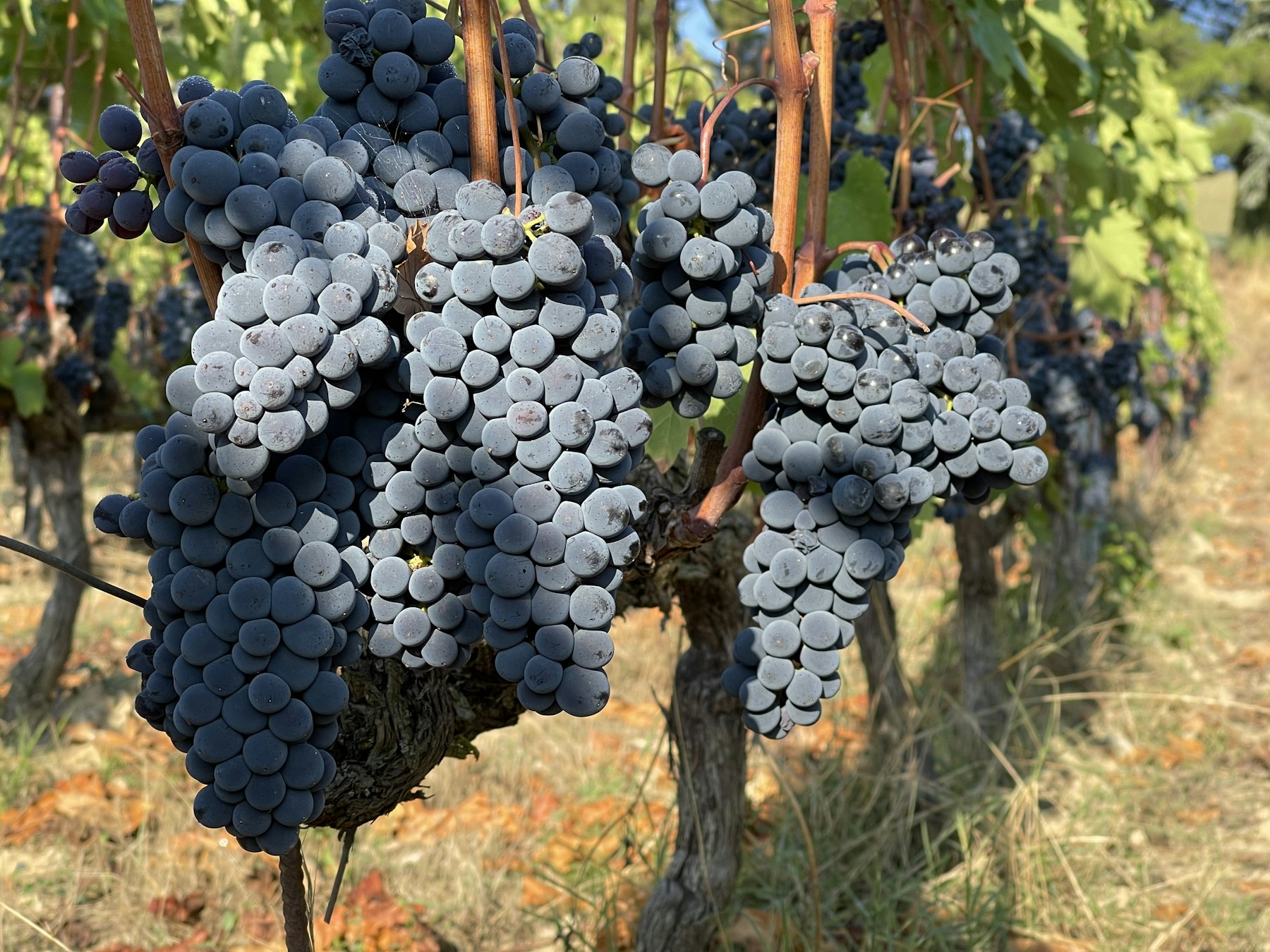
Steep ground
“Irti pendii” — steep slopes — is the phrase printed on the back labels for years. It is not a turn of phrase: there are plots where no machine can pass, and the fruit is picked by hand, into wooden tubs, as it always has been.
The harvest runs from September into October: twenty, twenty-five days straight, eight of us. The vines are trained to guyot. The fruit is sorted in the cellar, on a table, before it goes into the tanks.
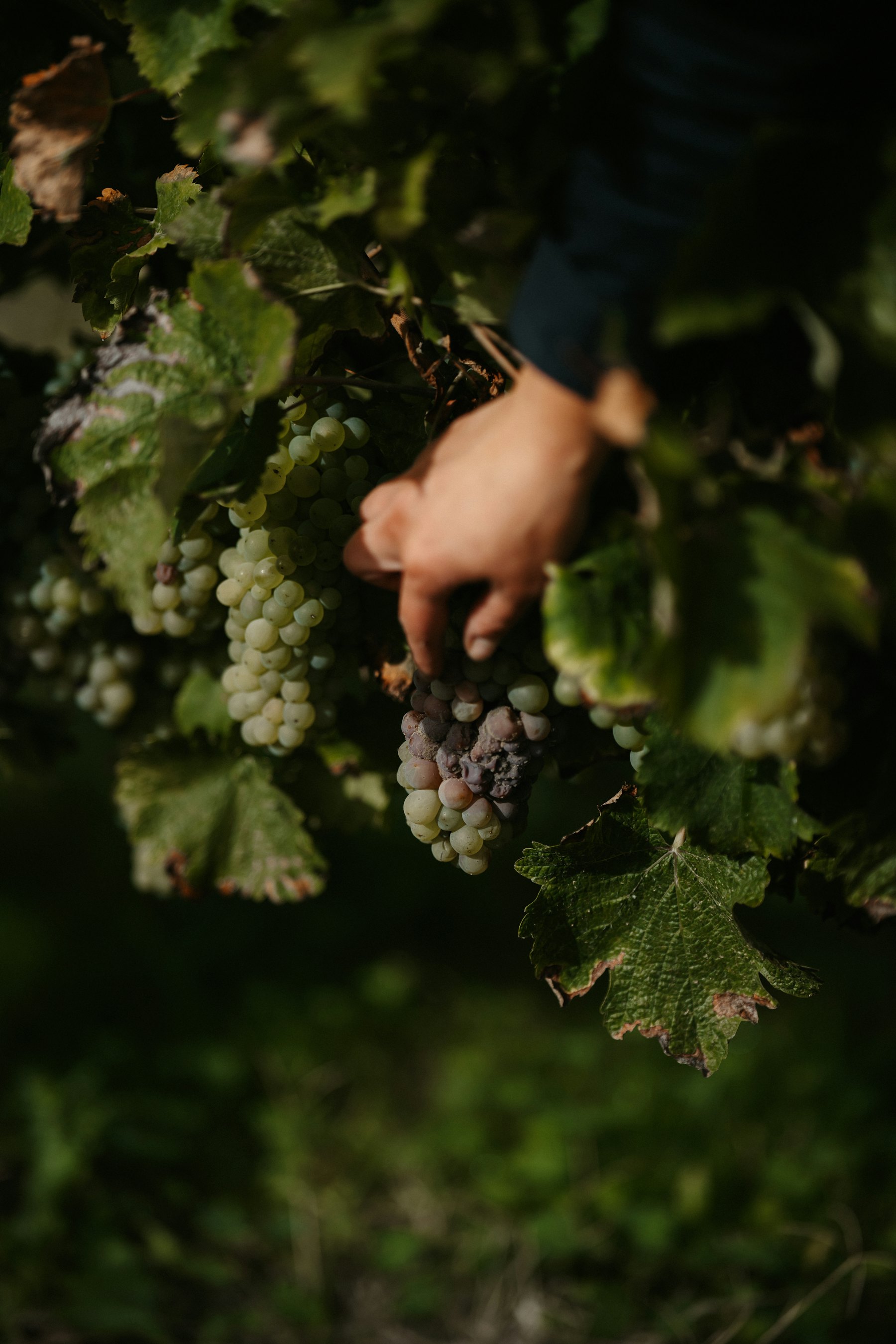
Steel and Concrete.
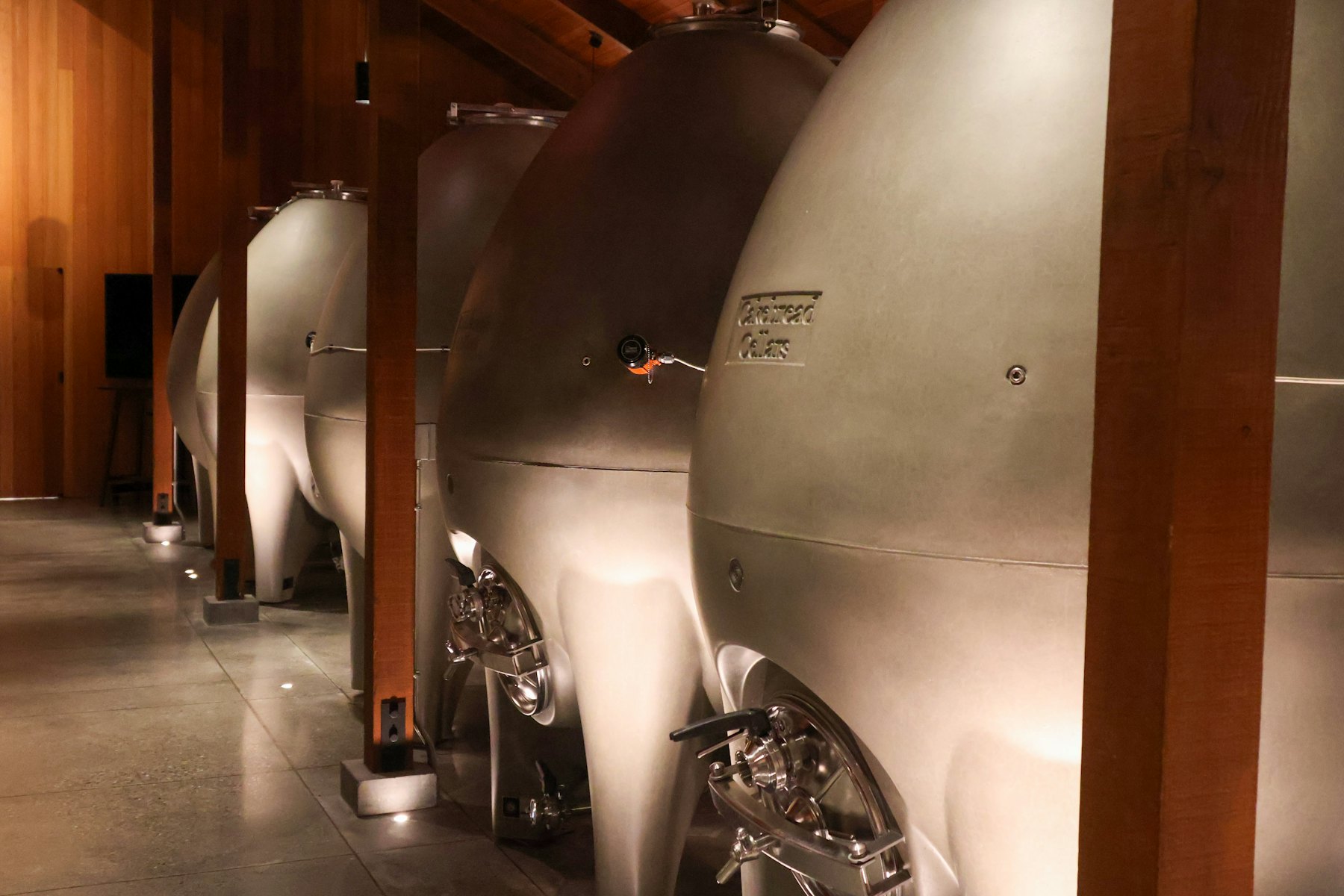
The cellar has been rebuilt since 2003, and we go on widening and improving it year after year. Today it holds six thousand hectolitres of wine.
The musts ferment in steel tanks at controlled temperature. Malolactic, when it starts, starts by itself: we do not induce it. The reds then spend eighteen months in concrete tanks and six in bottle before release. The grapes are grown organically.
There is no wood anywhere: no casks, no barriques. What reaches the glass is the fruit and the year, not the vessel.
What did not go well
In 1985 a frost killed every olive tree: they were replanted from scratch. Around 2000 vine disease took almost half the plants. In 2017 frost and drought together halved the crop.
These are three dates remembered here better than the good years, and they explain something that would otherwise make no sense: the vineyard you see today has almost all been replanted in the last ten years.
The wine that does not carry our name
Most of what we make leaves the estate in bulk: it is bought by brands that bottle it and sell it around the world. If we bottled everything, it would come to some four hundred thousand bottles a year.
With the arrival of the new generation the estate is going through a real change: the wine, traditionally sold in bulk, is finding more and more room inside the bottle, where it becomes an expression of the identity and the quality of the cellar. Our aim for the future is to build on that shift, raising the share we sell bottled and making the most of the production capacity we have.
Sangiovese, four fifths of it
Eighty per cent of the vines are Sangiovese. The rest is Merlot, Cabernet, Canaiolo and Trebbiano: they go into the blends, or stand alone, as in the white. Only a few hectares of old vines are left — nearly all the rest is young, replanted after the frosts and the disease. And it shows.
Where they come from
Not one of the four names was invented by an agency. They are household words, and some of them make no sense unless you are from here.
La Bigoncia
Red · Chianti Classico DOCGThe bigoncia is the wooden tub the hand-picked grapes go into. It is drawn on the label, with the monogram branded on its side.
The wineI Viottoli
Red · Sangiovese · Toscana IGTViottoli are the narrow paths that run between the rows. On these slopes they are the only way to reach the vines.
The wineI' Bugiardo
Rosé · Toscana IGTAt lunch a customer drank it well chilled, and drank a good deal of it: it went down like nothing. When he stood up he noticed the fourteen degrees. “This wine is a liar,” he said. The name stuck. The apostrophe in I' is the Tuscan article: i' = il, “the”.
The wineVin Brusco
White · Toscana IGT“Vin brusco” is the old Tuscan farmers' name for young, lively wine with an edge still on it. Not a flaw — the character.
The wineWho works here
Stefano Giachetti runs the estate: Massimo's son and the grandson of Silvano, the one with the three hectares.
Massimo lends a hand with everything. In a lifetime on the estate he has learned every job this place takes, and he still does all of them. For the vineyard and the cellar we work with an outside agronomist and oenologist.